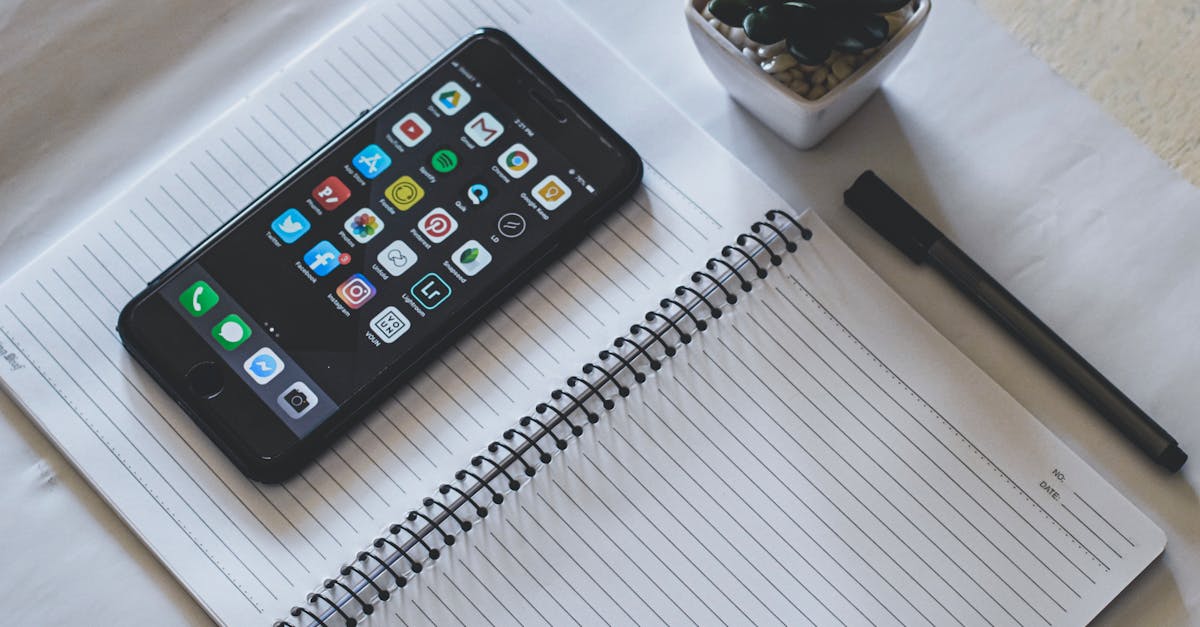
Paper Journals Against Digital Apps: Cultivating Better Memory
You’re staring at a blank page, or perhaps a blinking cursor, trying to capture your thoughts, ideas, or even just your daily to-do list. The perennial question gnaws at you: should I reach for that elegant leather-bound journal and a smooth-gliding pen, or fire up my favorite note-taking app on my tablet or laptop? In my experience, this isn’t merely a matter of personal preference; it fundamentally impacts how you process, retain, and recall information. Many believe digital is inherently ‘better’ because of searchability and endless storage, but what if those very advantages are silently undermining your memory and cognitive engagement? For years, I swung between both extremes, convinced each was the ultimate solution at different times. What I ultimately discovered was a nuanced truth: the method isn’t just a container for your thoughts; it’s an active participant in shaping them.
Key Takeaways
- Engaging multiple senses through physical writing significantly enhances memory recall and cognitive processing.
- The friction and deliberate nature of a physical journal foster deeper engagement and reduces digital distractions.
- Digital note-taking excels in searchability and organization for factual recall, but often at the cost of conceptual understanding.
- Strategic integration of both methods, leveraging their strengths, yields the most robust memory and productivity benefits.
The Tactile Advantage: Why Pen on Paper Sticks Better
When I first transitioned from exclusively digital note-taking back to a physical journal a few years ago, I did so out of a sense of nostalgia more than any perceived productivity gain. I missed the feel of a quality pen in my hand, the slight resistance of paper, and the visual aesthetics of my own handwriting. What I didn’t anticipate was the profound impact this shift would have on my memory. Suddenly, complex concepts I’d journaled about seemed to embed themselves more deeply. I found myself recalling specific phrases, even the location on the page where I’d written them, with startling clarity. This wasn’t just a feeling; research increasingly supports what I experienced firsthand: the tactile nature of writing by hand activates a wider network of brain regions, including areas associated with memory, language, and fine motor skills.
Consider the difference: with a keyboard, the motor action is largely uniform – a series of repetitive taps. Your fingers fly across the keys, often without conscious thought to the formation of individual letters. On the other hand, handwriting demands a distinct motor program for each character. Your brain is actively engaged in forming curves, lines, and loops, creating a unique neural pathway for each word. In my own daily planning, when I physically write down my top three priorities for the day, I rarely need to refer back to the list. They become ingrained. When I used a digital checklist, I’d often find myself revisiting the app multiple times, even for simple tasks. The act of forming the letters, feeling the pen move, seeing the ink appear – it all contributes to a richer, multisensory encoding of information. It’s a slower, more deliberate process, and that very friction is what gives it its power. It forces you to pause, to synthesize, and to commit to the thought, making it less likely to simply evaporate from your short-term memory.
Combatting Digital Distraction: The Focus Factor of Physical Journals
One of the most insidious threats to modern memory is distraction. Our digital devices, while offering unparalleled convenience, are also gateways to a ceaseless stream of notifications, emails, and internet rabbit holes. This constant context-switching is a documented destroyer of deep work and, by extension, deep learning and memory formation. When I was deep into my digital note-taking phase, I’d often find myself toggling between my journaling app, email, Slack, and a browser tab or two, all within minutes. Each switch fragmented my attention, preventing the sustained focus necessary for meaningful retention. The mistake I see most often is believing that sheer speed and accessibility equate to superior learning. In fact, the opposite is often true.
What changed everything for me was adopting a strict ‘analog-first’ rule for any task requiring creative thought, reflection, or genuine problem-solving. When I pick up my physical journal, there are no notifications vying for my attention. There’s no tempting browser icon waiting to whisk me away to an unrelated search. It’s just me, my thoughts, and the page. This dedicated, distraction-free environment creates a mental ‘container’ for deep focus. This isn’t just about willpower; it’s about engineering your environment to support your cognitive goals. The very act of physically separating myself from my digital devices to engage with my journal signals to my brain that this is a period for concentrated, uninterrupted thought. This sustained attention allows for stronger neural connections to form, making the information I process far more memorable. It’s not that digital tools can’t be used mindfully, but the default state of digital is one of pervasive connectivity and potential interruption, a state that actively works against memory consolidation.
The Digital Edge: Searchability for Factual Recall and Organization
While physical journals win handily for deep cognitive engagement and conceptual memory, it would be disingenuous to dismiss the undeniable strengths of digital applications. For certain types of information, digital note-taking offers advantages that simply cannot be replicated by paper. The most prominent, in my view, are instant searchability and unparalleled organizational flexibility for factual recall. If I need to find a specific statistic, a contact detail, or a quote from a research paper I read two years ago, a quick search in my digital archive will pull it up in seconds. Flipping through dozens of physical journals, even with a robust indexing system, is simply not comparable.
I’ve learned to leverage this strength by using digital apps for factual storage and quick reference. For example, my personal CRM details, receipts, project specifications, and meeting minutes (where I’m merely recording facts, not reflecting deeply) all reside in digital formats. The ability to tag, categorize, and link notes across different projects is incredibly powerful for information management. Boolean search queries, smart folders, and even AI-powered summarization tools within advanced note apps offer a level of access and synthesis that paper can’t touch. Where digital truly shines is as an external memory bank, allowing you to offload granular details so your organic brain can focus on higher-order thinking and problem-solving. The key here is discerning what kind of memory you’re cultivating. For quick, precise recall of facts, digital is the undisputed champion.
Strategic Integration: Blending the Best of Both Worlds
After years of bouncing between pure analog and pure digital systems, I’ve come to realize that the most powerful approach isn’t an either/or, but a sophisticated both/and. The optimal strategy involves a conscious, deliberate integration of paper journals and digital apps, leveraging each for its unique cognitive and practical strengths. This isn’t about creating more work; it’s about optimizing your workflow for maximum memory and minimum friction. The common misconception is that a single system must solve all problems. In my experience, that leads to compromise in both realms.
My current, highly effective system involves an ‘analog-first, digital-second’ principle. All initial thought-dumping, brainstorming, deep reflection, and creative problem-solving happens in my physical journal. This includes outlining articles, processing complex personal issues, and developing strategic plans. Once these ideas are fully formed and synthesized, the actionable components or key insights are then selectively transferred to my digital system. For instance, a detailed project plan might be brainstormed on paper, with the final tasks then entered into my digital task manager. Key conceptual breakthroughs are summarized and typed into a ‘knowledge vault’ app for future reference, but always after the initial processing on paper. This hybrid approach allows me to benefit from the superior memory-encoding of physical writing, while still retaining the searchability and organizational power of digital tools. It prevents the ‘death by a thousand tabs’ distraction of purely digital thought, and avoids the frustration of trying to retrieve a specific data point from a stack of notebooks. This intentional layering of tools ensures that my memory, both conceptual and factual, is robustly supported.
The Pitfall of Passive Digital Recording
There’s a subtle but significant trap in the allure of passive digital recording: the belief that simply capturing information digitally means you’ve effectively learned or remembered it. Many tools promise to transcribe lectures, summarize meetings, or even extract key ideas from articles with minimal effort on your part. While these can be powerful aids, they often create a false sense of accomplishment when it comes to memory and understanding. My early years of exclusively digital note-taking were rife with this pitfall. I’d attend a conference, dutifully type every salient point into a note app, and feel incredibly productive. Days later, if asked to recall the core tenets of a presentation, I often struggled far more than if I had taken sparse, handwritten notes.
The critical difference lies in the level of active processing. When you handwrite notes, especially in a lecture or meeting setting, you’re forced to synthesize and summarize in real-time. You can’t write down every single word; your brain has to filter, prioritize, and condense information into meaningful chunks. This active engagement during encoding is a cornerstone of strong memory formation. Digital typing, particularly for fast typists, can become a more passive transcription exercise, bypassing the deeper cognitive work required for true retention. In my current system, even when attending digital meetings, I often have a physical notebook beside me. I scribble down key concepts, questions, and reflections by hand, knowing that this active processing is what will actually help me remember and integrate the information, far beyond the utility of a word-for-word digital transcript. The convenience of digital capture can, paradoxically, make you mentally lazier if you’re not careful.
Cultivating a Reflective Practice, Not Just a Repository
Ultimately, the choice between paper journals and digital apps boils down to your primary goal. If your aim is simply to create an information repository – a searchable database of facts – then digital tools are unmatched. However, if your aim is to cultivate a reflective practice that deepens understanding, fosters creativity, and enhances long-term memory, then the physical journal offers a distinct, often overlooked, advantage. For me, the journal is not just a place to put ideas; it’s a place to wrestle with them.
This is where the physical journal truly shines: it invites reflection in a way a blinking cursor often doesn’t. The blank page feels less intimidating for raw, unedited thought. The slowness of handwriting encourages deeper processing, allowing you to connect ideas, explore nuances, and uncover insights that might be missed in the hurried pace of digital input. My most significant personal and professional breakthroughs have almost always started as messy scribbles in a physical notebook, not perfectly formatted bullet points in an app. The lack of editing features in a physical journal, while seemingly a limitation, is actually a strength for reflection. It preserves the raw, iterative process of thought, allowing you to trace the evolution of an idea more organically. It becomes a record not just of what you thought, but how you thought. This process of intentional, physical engagement with your own thoughts is, in my experience, the most powerful tool for cultivating a truly robust and engaged memory.
Frequently Asked Questions
Can I use both a paper journal and digital apps effectively?
Yes, absolutely. The most effective approach is often a strategic integration of both. Use a physical journal for deep reflection, brainstorming, and creative tasks, leveraging its tactile and distraction-free benefits for memory encoding. Then, transfer actionable items or key factual summaries to digital apps for easy searchability, organization, and quick recall.
Does writing by hand actually improve memory more than typing?
Numerous studies suggest that writing by hand activates more brain regions associated with memory and learning. The complex motor skills involved in forming letters create stronger neural pathways, leading to deeper cognitive processing and better long-term retention compared to the more uniform, less cognitively demanding act of typing.
How can I prevent digital distractions from impacting my note-taking?
To minimize digital distractions, create a dedicated ‘focus zone’ for your physical journaling. This might mean physically stepping away from your computer, putting your phone on silent or in another room, and closing unnecessary tabs. For digital notes, consider using a separate profile or ‘focus mode’ on your device that limits access to distracting apps and notifications.
What type of information is best suited for a physical journal versus a digital app?
Physical journals are ideal for reflective thought, creative writing, brainstorming, problem-solving, emotional processing, and learning complex concepts. Digital apps are best for factual data, quick reference information, project management tasks, searchable archives, contact details, and anything requiring easy sharing or rapid editing.
Is it worth investing in a high-quality pen and paper for journaling?
While not strictly necessary, investing in a good quality pen and paper can significantly enhance the sensory experience of physical journaling. A smooth-gliding pen and paper with a pleasant texture can make the process more enjoyable and encourage more frequent and sustained engagement, indirectly supporting better memory and reflection.
Written by Eleanor Vance
Productivity & Home Management
A former elementary school teacher, Eleanor brings clarity and organization to life's trickiest tasks.
You Might Also Like
Digital Files Don't Organize Your Life: Strategic Tagging and Folder Flow Deliver Real Clarity
Discover how a 'dump it all in one folder' approach to digital files drains focus, and learn a strategic tagging and folder flow system for true clarity.
Secure Your Home Network After a VPN Setup Without Missed Vulnerabilities
Don't overlook critical security gaps after setting up a VPN. Learn to identify and patch vulnerabilities for true home network protection.
Digital Asset Organization Mistakes That Drain Your Productivity
Discover common digital asset organization mistakes that silently erode your productivity and learn actionable strategies to reclaim your focus.